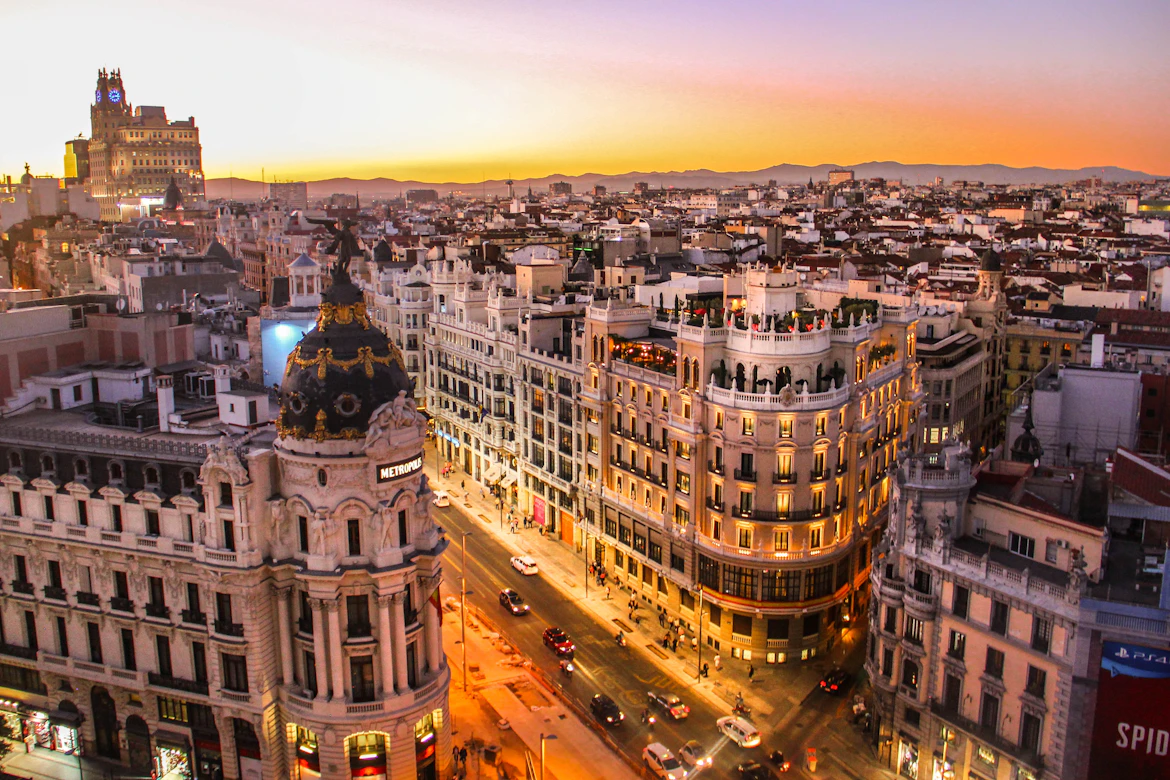
Introduction: A Tapestry of Kingdoms and Zest for Life
Spain is an absolute masterpiece of a destination, operating as a sensory explosion where ancient history, deep regional pride, and a legendary zest for life collide under a near-constant Mediterranean sun. It is a nation defined by its striking diversity, where the rugged, emerald-green cliffs of the Celtic north feel worlds away from the sun-baked, olive-strewn plains of the Andalusian south. Offering travelers a breathtaking journey through time, Spain seamlessly pairs jaw-dropping Moorish palaces and soaring Gothic cathedrals with a cutting-edge contemporary art scene and a culinary culture that treats eating as a sacred social ritual.
Quick Facts
| Parameter | Detail & Information |
|---|---|
| Capital | Madrid (The Absolute Geographical Heart of Spain) |
| Currency | Euro (€) - Standard European currency |
| Official Language | Spanish (Regional co-official languages include Catalan, Galician, and Basque) |
| Power Plugs | Type C and Type F (Standard European 230V, 50Hz) |
| Emergency Number | 112 (Universal European emergency hotline) |
Why Visit Spain?
Spain provides an exceptional and highly rewarding travel experience, appealing to history enthusiasts, design lovers, and foodies alike. It boasts some of the world's most spectacular Moorish fortress complexes, a diverse coastline of pristine Mediterranean coves, and a legendary tapas social culture. Encircled by France, Portugal, and the Atlantic, the country offers a peaceful, exceptionally clean, and highly secure environment where ancient Roman, Islamic, and Catholic heritage blend seamlessly, making it a highly rewarding and convenient holiday destination.
Border Sharing Countries
Spain is located in southwestern Europe on the Iberian Peninsula, sharing its land borders with five nations. It is bordered by Portugal to the west, France and Andorra to the northeast across the Pyrenees, Gibraltar to the south, and Morocco via the sovereign North African exclaves of Ceuta and Melilla. Its extensive coastlines are shaped by the Mediterranean Sea to the east and south, and the Atlantic Ocean to the north and west.
Best Time to Visit
To experience the absolute best of the country's historic cities, imperial palaces, and outdoor tapas plazas, plan your trip during the spring shoulder season from April to June, or the autumn shoulder season from September to October. These months offer comfortable, pleasant daytime temperatures, green mountain landscapes, and moderate crowds. The summer months of July and August are extremely hot, particularly in the southern Andalusian plains, and highly crowded on coastal beaches, while winter is mild on the coast but chilly inland.
Top Cities to Explore
Madrid
Madrid serves as the high-energy capital of Spain, standing proudly at the absolute geographical heart of the nation. It is a city of sweeping, majestic boulevards, grand open-air plazas, and an unrivaled "Golden Triangle of Art" spearheaded by the world-famous Prado Museum. Madrid truly thrives after dark; its historic neighborhoods, like Malasaña and La Latina, come alive with locals hopping from one traditional tavern to the next, infusing the city with an infectious, sleepless vitality best enjoyed over late-night tapas crawls.
Barcelona
Barcelona operates as the avant-garde, artistic heartbeat of Catalonia on the northeast coast. Famously shaped by the whimsical, nature-inspired genius of architect Antoni Gaudí, it is a city where fairytale stone towers rise dramatically next to urban Mediterranean beaches. Walking through Barcelona means transitioning seamlessly from the narrow, shadowy labyrinth of the medieval Gothic Quarter to the wide, grid-like avenues of the modernist Eixample district, offering a dynamic and highly creative coastal lifestyle.
Seville
Deep in the south, Seville captures the quintessential romantic essence of Andalusia. Framed by fragrant orange trees and horse-drawn carriages, this sun-drenched city is the fiery birthplace of flamenco music and dance. It is a place of breathtaking historical gravity, where narrow, whitewashed Jewish quarters wrap around massive, golden-hued palaces that showcase centuries of Christian and Islamic architectural fusion, centered around the grand Cathedral and the Real Alcázar.
Granada
Granada is situated at the foot of the snow-capped Sierra Nevada mountains, presenting an unforgettable, deep-rooted Moorish heritage. The city is world-famous as the home of the monumental Alhambra palace complex, which stands proudly on a hill above the red-roofed medieval houses. Explore the historic, whitewashed Albaicín quarter, enjoy the traditional tea houses, and experience the unique southern custom of receiving free, generous tapas with every drink you order.
Valencia
Valencia is a dynamic city situated along the eastern Mediterranean coast, serving as the birthplace of the world-famous saffron *Paella*. It features a stunning blend of a historic old town and the futuristic City of Arts and Sciences designed by architect Santiago Calatrava. The city has transformed its former riverbed into a massive, lush green park called the Turia Gardens, combining active outdoor beach life with creative design culture.
San Sebastián
San Sebastián is the culinary crown jewel of the Basque Country, located on the northern coast close to the French border. The city is famous for its elegant, crescent-shaped La Concha beach, historic belle époque buildings, and its world-class culinary scene. Walk along the scenic harbor, explore the narrow lanes of the Old Town, and participate in the local ritual of *pintxos*—sampling exceptionally creative bite-sized gourmet dishes in traditional bars.
Toledo
Known as "The City of Three Cultures" due to its rich, harmonious history of Christian, Jewish, and Muslim co-existence, Toledo is a majestic, fortified city perched on a deep granite gorge of the Tagus River. The city is a labyrinth of steep, narrow stone alleys, ancient synagogues, mosques, and towering Gothic cathedrals. It preserves a deep sense of history centered around its legendary sword-making workshops and works by painter El Greco.
Top Attractions
| Attraction | Location | Type / Era | Significance & Key Highlights |
|---|---|---|---|
| La Sagrada Família | Barcelona | Catalan Modernism / 1882-Present | Antoni Gaudí's unfinished geometric masterpiece, featuring organic forest-like interior pillars and vivid stained glass. |
| The Alhambra | Granada | Nasrid Islamic / 13th-14th Century | A monumental hilltop fortress-palace boasting incredibly intricate geometric stucco carvings and reflection pools. |
| Aqueduct of Segovia | Segovia | Roman Engineering / 1st Century CE | A colossal granite aqueduct built entirely without mortar or cement, spanning the city with 167 double-tiered arches. |
| The Prado Museum | Madrid | Neoclassical Museum / 1819 | One of the world's premier art galleries, housing an unrivaled royal collection of masterpieces by Velázquez and Goya. |
Things To Do
Exploring the grand historic boulevards and world-class art collections of Madrid on foot is a premier experience, taking you past the neoclassical Royal Palace and through the grand, leafy avenues of Retiro Park. In Barcelona, wandering the narrow, shadow-filled medieval stone alleys of the Gothic Quarter and exploring the whimsical modernist avenues of the Eixample to admire Gaudí's creations is highly recommended.
To experience the absolute fire and soul of Spanish culture, attending a live, passionate flamenco performance inside a historic cave tavern in Granada's Sacromonte or a traditional *tablao* in Seville is an absolute must. For culinary enthusiasts, embarking on a traditional *pintxos* bar crawl through the Old Town of San Sebastián is highly popular, where you can sample highly creative, bite-sized gourmet dishes paired with a glass of crisp, local Basque *Txakoli* wine.
Active travelers can enjoy hiking through the rugged limestone peaks of the Pyrenees or walking a section of the historic Camino de Santiago pilgrimage trail across northern Spain. For history lovers, touring the magnificent Moorish palace complex of the Alhambra in Granada and walking its reflection-filled Generalife gardens is a majestic experience. Finally, enjoying an authentic, wood-fired saffron *Paella* along the beach in Valencia is a beloved local culinary ritual.
Hidden Gems
Ronda is a spectacular, romantic town in southern Spain perched on the sheer cliffs of the colossal El Tajo gorge, which splits the town in half and is spanned by the Puente Nuevo—a monumental 18th-century stone bridge that offers breathtaking, dizzying views. Hidden in the far north, the Picos de Europa National Park is a rugged limestone mountain range filled with deep green valleys, historic sanctuaries like Covadonga, and pristine glacial lakes.
On the Asturian coast, Cudillero is a picturesque, quiet fishing village where colorful houses are stacked like an amphitheater around a small, crescent-shaped harbor, offering a peaceful, seafood-rich escape that remains beautifully untouched by major international crowds.
Food & Dining Guide
Spanish cuisine is a rich, highly satisfying Mediterranean and Atlantic fusion heavily focused on fresh seafood, olive oil, cured meats, and seasonal vegetables, celebrating regional pride in every dish. Traditional specialties include *Jamón Ibérico* (cured, acorn-fed Iberian ham), *Paella Valenciana* (saffron rice with rabbit and beans), *Gazpacho* (chilled tomato soup), *Tortilla de Patatas* (potato omelet), and crispy *Churros* dipped in thick hot chocolate. Traditional dining is a highly social, late-shifted affair. Restaurants rarely open before 1:30 PM for lunch, and showing up for dinner before 9:00 PM will result in locked doors or empty rooms. Tipping is appreciated but not mandatory, as service is included; leaving a small cash tip of 5% to 10% is customary for excellent service.
Transportation Systems
Spain features an exceptionally clean, modern, and highly efficient public transportation network. The high-speed AVE train network operated by Renfe connects major cities quickly, reducing the journey from Madrid to Barcelona or Seville to under three hours, while regional buses link smaller towns. While public transit within major cities is cheap and easy to use, renting a car is an excellent option for exploring the scenic white villages (*pueblos blancos*) of Andalusia or the green northern coast, though driving in historic city centers is strictly restricted to residents.
Visa & Entry Requirements (2026 Guidelines)
Spain is a fully integrated member of the Schengen Area [1.1.3]. If you hold a passport from a country requiring a Schengen visa (such as India), you must apply for a standard Type C Schengen Visa through the Spanish embassy at least 4 to 6 weeks before your intended departure [1.1.3]. For visa-exempt travelers (e.g., USA, UK), you must register online for an ETIAS authorization before boarding. The EU’s automated biometric Entry/Exit System (EES) is fully active at all international arrival points [1.1.5], requiring quick digital face and fingerprint scans at passport control, which replace physical passport stamping [1.1.5].
Shopping Hotspots
For high-quality, authentic Spanish leather goods and designer fashion, explore the elegant streets of the Salamanca district in Madrid. Spain is also world-famous for its olive oil (especially from the vast groves of Jaén), handcrafted damascene jewelry from Toledo, and traditional hand-woven Spanish fans (*abanicos*). For regional culinary gifts, purchase local cured Iberian ham (subject to your home country's customs regulations), fine Rioja red wines, or traditional saffron threads from local municipal markets.
Nightlife & Evening Entertainment
Nightlife in Spain is legendary, sleepless, and centered around different atmospheric districts of Madrid, Barcelona, and Ibiza. The Malasaña and Chueca districts of Madrid are the premier evening destinations, lined with packed cocktail bars, craft breweries, and trendy pubs. In Barcelona, the evening entertainment revolves around alternative music clubs and beachside lounges in Port Olímpic. During the summer, the Balearic Islands host some of the world's most famous electronic music clubs, while major cities host traditional classical concerts and opera in historic halls.
Local Travel Tips
Adapt to the local clock immediately—lunch is around 2:00 PM, and dinner is at 10:00 PM, so fill the evening gap by participating in the local ritual of *ir de tapeo* (strolling from bar to bar for a drink and a small plate of tapas). Greet locals with a warm, open smile, and keep in mind that Spain's regional diversity means learning a few local words in Catalan (Barcelona) or Basque (San Sebastián) is highly appreciated. Carry some physical Euro cash for purchasing metro tickets, market items, or dining in traditional tapas bars, where cards are often not accepted.
Packing List & Things to Remember
Pack comfortable, sturdy walking shoes to navigate the historic cobbled paths of Toledo and Seville easily. Bring lightweight, breathable linen clothing if you plan to travel during the hot southern summer, and a light jacket for cooler mountain evenings. Carry a secure, dedicated daypack to prevent pickpocketing in crowded tourist areas, especially in high-traffic zones like Barcelona's Las Ramblas. Bring a universal power adapter to accommodate standard Type C and F plug outlets, and carry a secure cash wallet to manage paper Euros safely.
Ready to Experience Spain's Moorish Magic?
Our experienced travel consultants are ready to help you plan a customized European itinerary that matches your timeline, budget, and travel preferences [1].