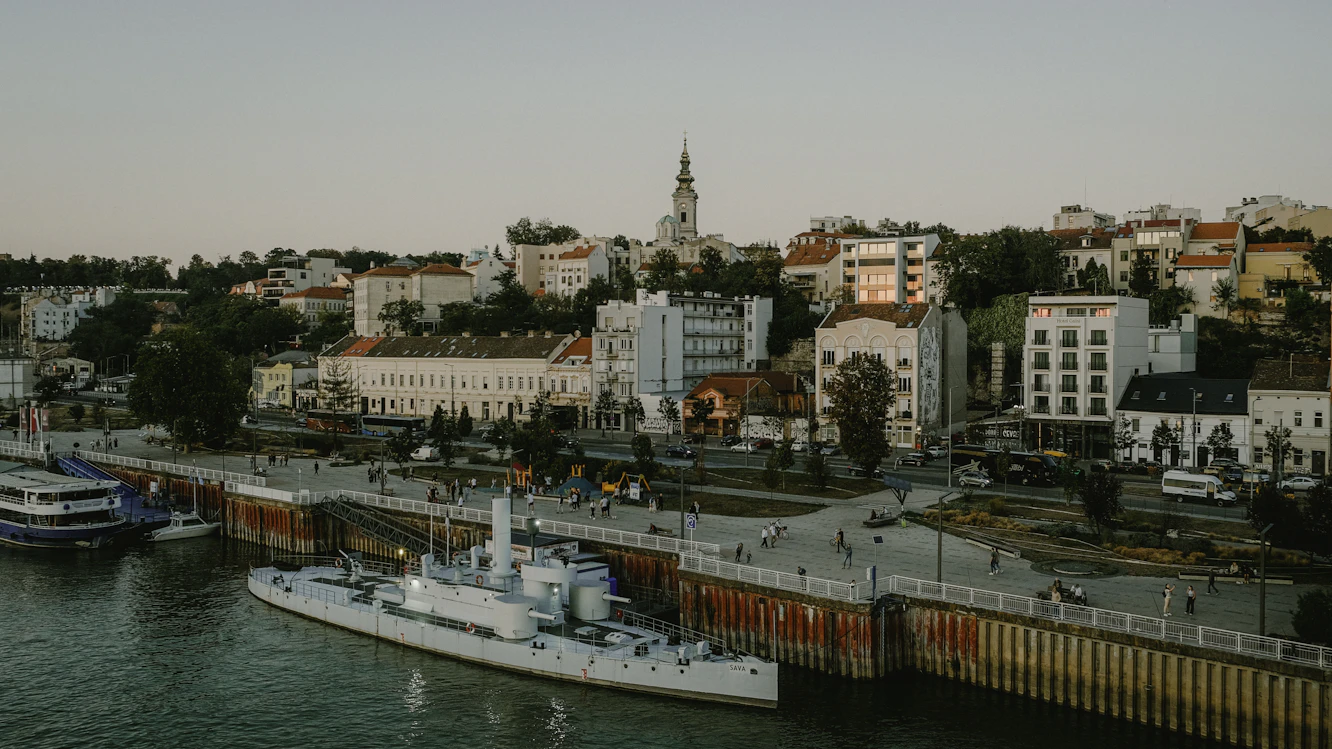
Introduction: The Crossroads of the Balkans
Serbia is an absolute masterpiece of a destination, operating as a historic and vibrant crossroads where Western Europe meets the unique heritage of the East. Situated along the flowing waters of the mighty Danube River, this Balkan gem combines ancient Roman ruins and medieval fortresses with cosmopolitan cities, rugged mountain national parks, and a legendary social energy. Offering travelers a deeply authentic and budget-friendly escape, Serbia seamlessly pairs its imperial Austrian-Hungarian and Ottoman legacies with an exceptionally warm and hospitable culture that welcomes visitors with open arms.
Quick Facts
| Parameter | Detail & Information |
|---|---|
| Capital | Belgrade (The High-Energy "White City") |
| Currency | Serbian Dinar (RSD) - Cash is preferred outside major hubs |
| Official Language | Serbian (Greeting locals with a friendly "Zdravo" is highly appreciated) |
| Power Plugs | Type C and Type F (Standard European 230V, 50Hz) |
| Emergency Number | 112 (Universal European emergency hotline) |
Why Visit Serbia?
Serbia provides an exceptional alternative to the tourist-heavy destinations of Western Europe, offering incredible value and raw local character. It boasts some of Europe’s most impressive river fortresses along the Danube, rich Austro-Hungarian art nouveau architecture in the north, and pristine mountain reserves perfect for outdoor hiking and wildlife watching. The country is globally celebrated for its vibrant social life, world-class culinary portions, and a unique, deep sense of hospitality where hosts treat guests with absolute warmth, making it a highly rewarding and unforgettable Balkan destination.
Border Sharing Countries
Serbia is located in the geographic heart of the Balkan peninsula, bordered by eight different nations. It is bordered by Hungary to the north, Romania and Bulgaria to the east, North Macedonia to the south, and Montenegro, Bosnia and Herzegovina, and Croatia to the west. It also shares a border with Kosovo to the southwest, making it a highly strategic hub for multi-country regional travel.
Best Time to Visit
To experience the absolute best of the country's national parks and outdoor dining, plan your trip during the spring shoulder season from April to June, or the autumn shoulder season from September to October. These months offer comfortable temperatures, lush green landscapes, and pleasant conditions for city walks. The summer months of July and August are excellent for major music festivals and river adventures, while the winter months from December to March are best for ski enthusiasts heading to the resort slopes of Kopaunik.
Top Cities to Explore
Belgrade
Belgrade serves as the majestic capital of Serbia, proudly standing as one of the oldest continuously inhabited cities in Europe. Located at the spectacular confluence of the Danube and Sava Rivers, the "White City" features a high-energy mix of architectural styles, from grand Ottoman structures and classical Austro-Hungarian boulevards to brutalist Soviet blocks. Explore the massive Belgrade Fortress in Kalemegdan Park, walk along the busy pedestrian Knez Mihailova Street, discover the bohemian Skadarlija quarter, and experience the lively creative energy of the Savamala district.
Novi Sad
Moving north, Novi Sad serves as the cultural and artistic engine of the northern Vojvodina province, long nicknamed the "Athens of Serbia." The city center is a beautiful showcase of elegant Austro-Hungarian architecture, colorful townhouse facades, and sunny open-air squares. It is famously dominated by the colossal Petrovaradin Fortress, which stands proudly on a cliff overlooking the Danube River and hosts the world-famous EXIT music festival every summer, offering a creative and highly relaxed northern pace.
Niš
Niš is situated in southern Serbia, serving as one of the oldest and most historic cities in the Balkans. As the official birthplace of the Roman Emperor Constantine the Great, the city is packed with deep historical gravity, including the ancient Medijana archaeological site and a massive, exceptionally preserved 18th-century Ottoman fortress. The city center features traditional Balkan culinary taverns, busy pedestrian avenues, and unique monuments that reflect the region's complex, turbulent past.
Subotica
Subotica is located in the northernmost corner of the country close to the Hungarian border, offering a stunning and colorful display of Secessionist (Art Nouveau) architecture. The city looks like a fairytale canvas, featuring the spectacular, highly detailed Raichle Palace, a grand, colorful City Hall, and quiet, leafy avenues. It serves as a peaceful, multicultural haven close to the scenic shores of Palić Lake, which is lined with historic wooden spas and volcanic vineyards.
Kragujevac
Kragujevac serves as the historic first capital of modern Serbia, located in the heart of the central Šumadija region. It features several historic administrative structures, the old court chapel, and the sprawling Šumarice Memorial Park, which commemorates the city's tragic WWII history. Winding side streets and a lively student population give the city a dynamic, youthful pulse, balancing deep national history with a modern, relaxed lifestyle.
Zlatibor
Zlatibor is a picturesque mountain resort town located in southwestern Serbia, renowned for its healthy mountain air, rolling green pastures, and dense pine forests. It features a lively town center built around a scenic mountain lake, traditional wooden log cabins, and nearby natural wonders like the Stopića Cave. It serves as an excellent year-round base for travelers looking to enjoy extreme mountain sports, hiking, and traditional Šumadija country dining.
Vrnjačka Banja
Vrnjačka Banja is the premier and largest mineral spa resort town in Serbia, located in a scenic, forested valley south of the West Morava River. It has been famous since Roman times for its natural, healing hot springs and elegant, park-lined wellness resorts. The town features romantic arched stone bridges, including the famous Bridge of Love where couples lock padlocks, and a quiet, slow-paced atmosphere designed entirely around wellness and relaxation.
Top Attractions
| Attraction | Location | Type / Era | Significance & Key Highlights |
|---|---|---|---|
| Belgrade Fortress | Belgrade | Fortress / Roman-Ottoman | A massive, historic defensive complex perched on a cliff at the confluence of the Danube and Sava Rivers. |
| Petrovaradin Fortress | Novi Sad | Danube Fortress / 18th Century | Nicknamed the "Gibraltar on the Danube," famous for its unique "reversed" clock tower and catacombs. |
| Temple of Saint Sava | Belgrade | Orthodox Cathedral / Neo-Byzantine | One of the largest Orthodox church buildings on earth, featuring a spectacular interior covered in gold-leaf mosaics. |
| Skull Tower (Ćele Kula) | Niš | Historic Monument / 1809 | A somber, unique stone tower built by the Ottoman Empire utilizing the skulls of rebel Serbian soldiers. |
Things To Do
Wandering through the historic Kalemegdan Park and Belgrade Fortress on foot is a premier experience, taking you along ancient defensive ramparts to enjoy panoramic sunset views over the meeting of the Sava and Danube Rivers. In Novi Sad, crossing the bridge to explore the massive Petrovaradin Fortress and its unique clock tower is highly recommended, offering a look into the region's complex military history.
For culinary enthusiasts, dining in the historic, cobbled Skadarlija bohemian quarter of Belgrade is an absolute must. This atmospheric street is lined with traditional taverns (*kafanas*) where you can enjoy local specialties accompanied by live acoustic tambourine musicians. For art lovers, discovering the colorful Secessionist architecture of Subotica on foot offers an exceptional visual journey, connecting grand municipal halls with fairytale palaces.
Active travelers can enjoy a scenic ride on the Šargan Eight (*Šarganska Osmica*), a historic narrow-gauge steam railway that loops through the Mokra Gora mountains in a unique figure-eight pattern. For hikers, exploring the dramatic viewpoints of Tara National Park, such as the famous Banjska Stena look-out, offers spectacular, untouched wilderness views over the emerald Drina River canyon. Finally, exploring the unique geological formations of Đavolja Varoš (Devil's Town) in the south provides a memorable look into local natural wonders.
Hidden Gems
Đavolja Varoš is a spectacular, rare natural wonder featuring 202 natural stone pillars capped with rock, surrounded by acidic mineral springs and steeped in local legends of petrified wedding guests. Hidden in southwestern Serbia, the Uvac River Canyon is a breathtaking natural reserve famous for its spectacular, tight river loops (*meanders*) and serving as the nesting sanctuary for the rare, magnificent griffon vulture.
In the mountains of Mokra Gora, Drvengrad (also known as Küstendorf) is an artistic, traditional wooden village built entirely out of local timber by filmmaker Emir Kusturica, featuring cozy chalets, a cinema, and a historic wooden church, offering a unique and peaceful escape into creative Balkan culture.
Food & Dining Guide
Serbian cuisine is a hearty, highly satisfying Balkan fusion heavily influenced by Central European, Turkish, and Mediterranean culinary traditions, utilizing fresh, high-quality meats and vegetables. Traditional specialties include *Ćevapi* (grilled minced meat sausages), *Pljeskavica* (spiced meat patties often stuffed with local cheese), *Kajmak* (a rich, creamy clotted dairy spread), and *Ajvar* (a delicious roasted red pepper spread). Traditional dining happens in cozy, high-energy taverns known as *kafanas*, where meals are enjoyed slowly over local wines or traditional fruit brandies known as *Rakija* (especially the plum-based *Šljivovica*). Tipping is appreciated but not mandatory; rounding up the bill or leaving a cash tip of 5% to 10% is customary for good service.
Transportation Systems
Serbia features a rapidly developing and modernizing public transportation network. The highly efficient high-speed "Soko" train connects Belgrade and Novi Sad quickly in just 36 minutes, while long-distance coaches link regional hubs with frequent, reliable service. While public transport within Belgrade is cheap and easy to use, renting a car is highly recommended for exploring outer national parks like Tara, Uvac, or the southern historic sites of Niš and Devil's Town, as mountain roads are well-maintained but require careful driving.
Visa & Entry Requirements (2026 Guidelines)
Serbia is not a member of the European Union or the Schengen Area, but it maintains tourist-friendly entry guidelines. If you hold a passport from a country requiring a Serbian visa (such as India), you can enter Serbia visa-free for up to 90 days if you possess a valid, multiple-entry Schengen, US, or UK visa [1.1.3]. If you do not hold any of these multiple-entry visas, you must apply for a Serbian visa in advance through the embassy. Standard international passport control is fast, but prepare to show proof of return flights and confirmed hotel bookings.
Shopping Hotspots
For traditional wool sweaters and knitwear featuring intricate, historic patterns, visit the open-air market stalls of Sirogojno village. In Belgrade, the Knez Mihailova pedestrian street is lined with international brands and local fashion designers. For regional culinary gifts, purchase traditional hand-thrown clay pottery from Zlakusa, local mountain honey, and award-winning *Rakija* brandies from specialized shops in Novi Sad.
Nightlife & Evening Entertainment
Belgrade is world-famous as Europe's premier capital of nightlife, centered around the *Splavovi*—massive, floating nightclubs and restaurants permanently moored along the Sava and Danube River banks that host parties and live music until sunrise. For a more relaxed, bohemian evening, enjoy traditional live music in Skadarlija, or explore the alternative bars and creative pubs of Cetinjska Street. During the summer, Novi Sad's EXIT festival draws music lovers from across the globe to Petrovaradin Fortress.
Local Travel Tips
Serbia uses both the Cyrillic and Latin alphabets, with road signs and menus showing both in most tourist areas, making navigation easy. The Serbian Dinar (RSD) is the sole official currency; carry plenty of cash for daily transactions, public transport, and dining in traditional kafanas, as credit cards are accepted in major cities but rarely in rural villages. Tap water is safe and clean to drink in major cities, and always greet locals with a warm, open smile, as hospitality is deeply valued.
Packing List & Things to Remember
Pack sturdy, comfortable walking shoes to navigate the historic cobbled paths of Belgrade and Novi Sad easily. Bring a light, windproof jacket even in summer, as the river breezes along the Danube and Sava can be cool. Carry a secure, dedicated cash wallet to manage paper Dinars safely during your journey, and bring a universal European power adapter to accommodate standard Type C and F plug outlets.
Ready to Experience Serbia's Balkan Energy?
Our experienced travel consultants are ready to help you plan a customized Balkan itinerary that matches your timeline, budget, and travel preferences [1].